Strength Training for Women Over 40 | AUM Boston
Strength Training for Women Over 40 | AUM Boston
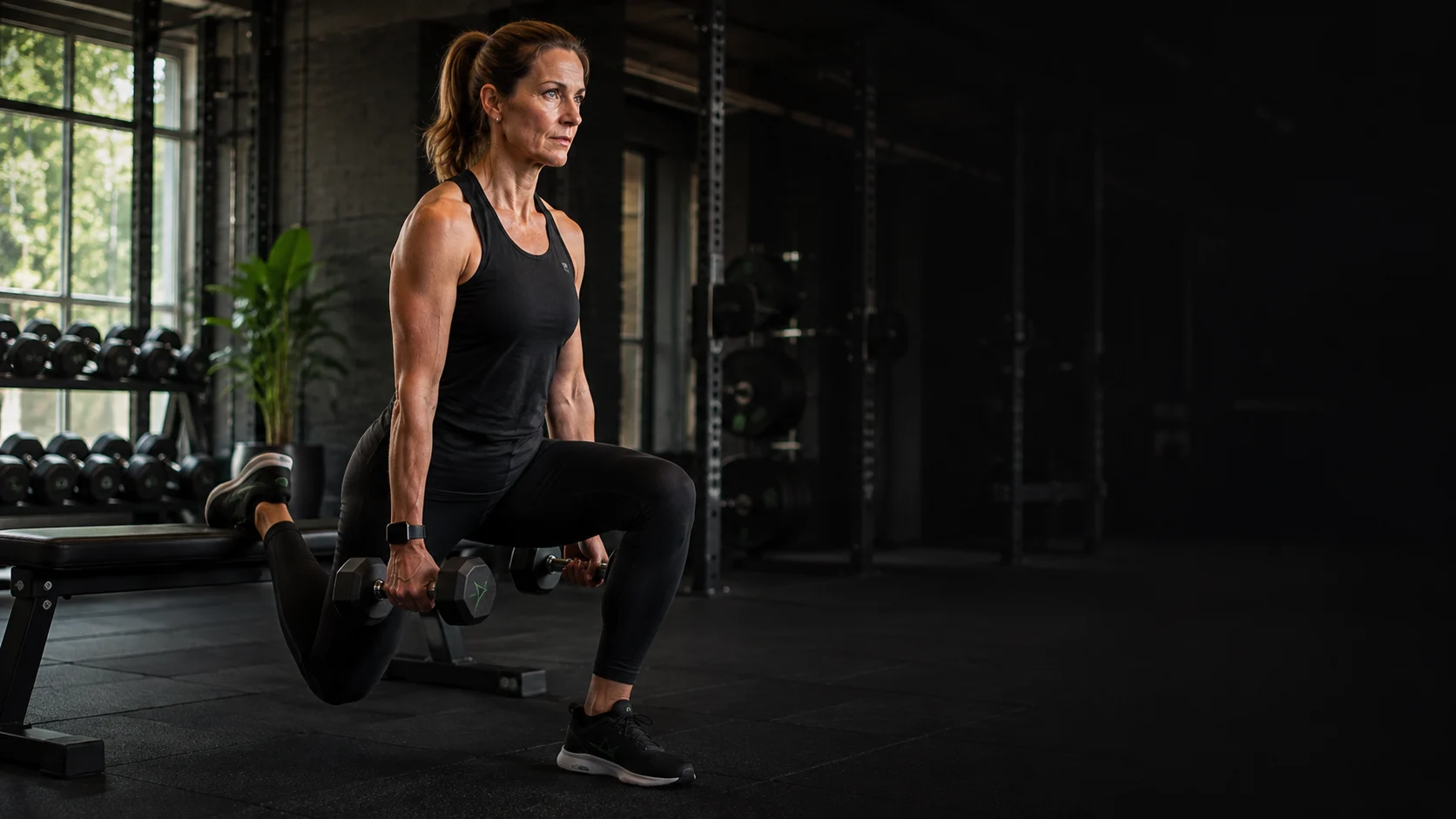
Most advice about strength training after 40 is either generic or aimed at people ten years older than you. It rarely accounts for the version of fitness that actually applies at this stage: real muscle loss already underway, a metabolism that behaves differently than it did in your 30s, and a schedule with far less room for trial and error.
This guide covers what changes in your body after 40, what a program built around those changes actually looks like, and where AUM’s approach fits if you want it built for you specifically rather than adapted from a plan meant for someone twenty years younger.

Quick Answer: What Changes After 40, and What Actually Works
Strength training for women over 40 should prioritize compound lifts (squats, deadlifts, presses, rows), progressive overload, adequate protein, and real recovery time, not endless cardio or the same light dumbbells for years on end. Two to three sessions a week, done consistently, outperforms a harder routine that falls apart after a month. The body composition and metabolism shifts that show up after 40 respond well to this kind of training. They don’t respond to guessing.
The key point: Muscle loss after 40 is real and measurable, but it’s also one of the most trainable things about aging. A program built around your actual strength levels and recovery capacity, not a generic template, is what makes the difference.
Why Strength Training Matters More After 40
Several things shift at once in your 40s, and strength training addresses nearly all of them directly, more directly than cardio, supplements, or diet changes on their own.
Muscle Mass
Adults can lose 3 to 8 percent of muscle mass per decade after 30, and that rate accelerates after 40. Resistance training is the most direct way to slow or reverse it.
Bone Density
Bone density naturally declines with age, and the drop accelerates for women around menopause. Weight-bearing strength work is one of the few interventions shown to help maintain it.
Metabolism
Muscle tissue burns more calories at rest than fat tissue. Building and keeping muscle helps offset the metabolic slowdown that tends to come with age.
Where Most Programs Get It Wrong After 40
A few patterns show up again and again in women starting or restarting a fitness routine at this age. Relying only on cardio supports heart health, but does very little to build or preserve muscle mass, the strength and bone-density decline keep happening regardless of how many miles get logged. Staying too light for too long feels safe, but without progressive overload, strength gains stall out early. Skipping protein is common and costly, muscle repair and growth depend on adequate intake, and needs tend to be higher at this age than most women realize. Training without a real plan, piecing together random workouts from videos or an old routine, rarely accounts for what an individual body actually needs at this stage.
The women who see the best results after 40 are training the body they actually have right now, not the one they had at 25.
Who This Kind of Program Is Actually Built For
Assessment-first strength training tends to earn its time back for a specific set of people, more than it does for everyone equally.
- Women who’ve noticed strength, energy, or muscle tone slipping and want a program built around what’s actually changed, not a generic fix
- Anyone navigating perimenopause or menopause who wants training that accounts for those shifts directly
- People who’ve tried general gym programming before and stalled without knowing why
- Busy professionals who need every session to count because two or three a week is the realistic ceiling
- Anyone managing an old injury or joint sensitivity that a generic template was never built to account for
How AUM Approaches Strength Training for Women Over 40
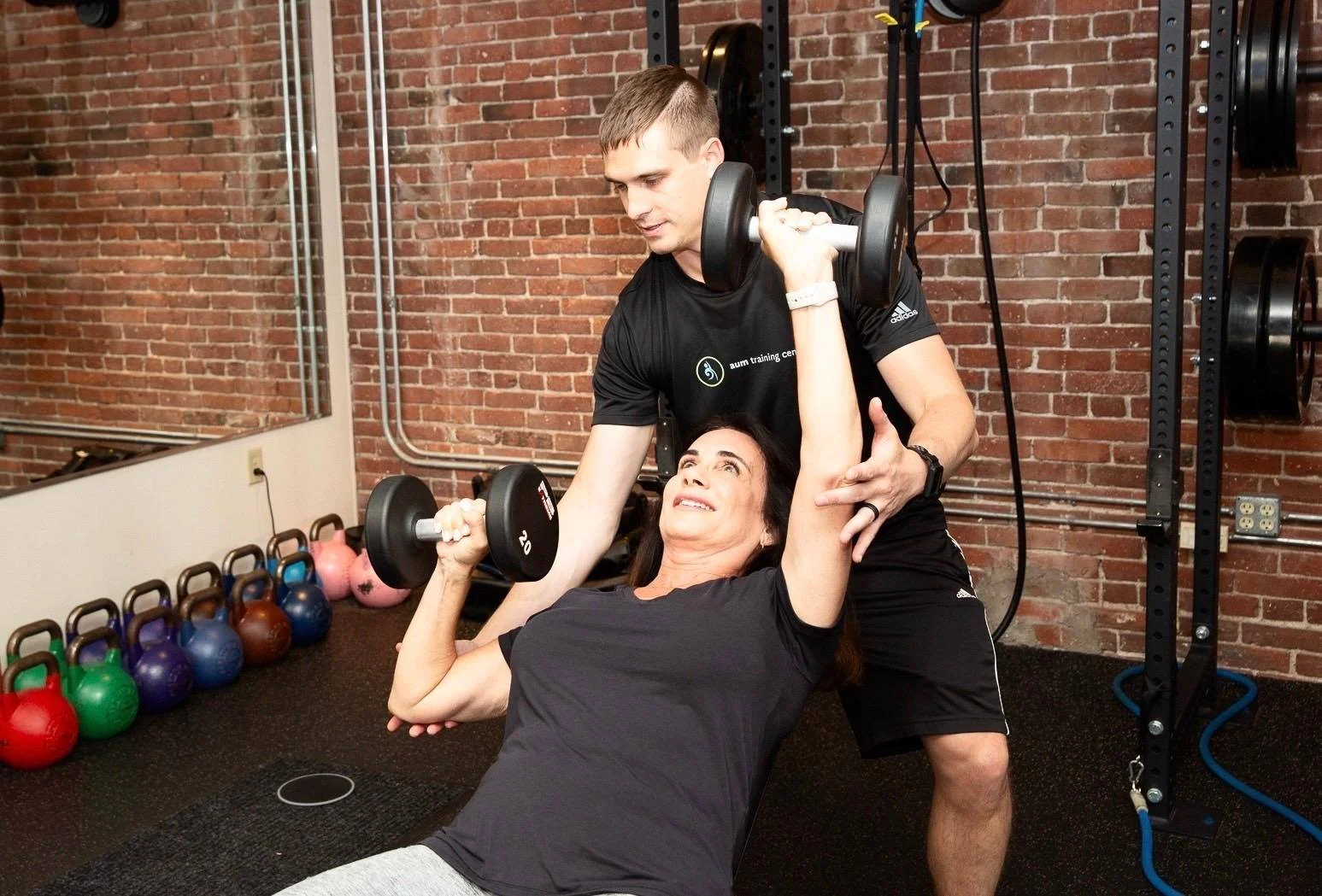
Every AUM program starts with a real assessment, not a generic template. That means understanding current strength levels, mobility, injury history, and goals before building a plan, often using the same metabolic assessment process used to establish training baselines across every AUM program, including the VO2 max testing used for longer-term conditioning work. Sessions are private and one-on-one, with a coach watching form and adjusting load in real time, and the plan gets reviewed and adjusted on a real schedule rather than left to run on autopilot for months. A closer look at how AUM structures coaching more broadly is on the Boston personal trainer page, and full service options are available for anyone comparing studios side by side.
Frequently Asked Questions
Is strength training after 40 safe if I’ve never lifted weights before?
Yes, as long as the program starts with a real assessment and builds up gradually. Starting weight training later in life is common, and working with a coach who checks form and adjusts load appropriately lowers injury risk significantly compared to starting alone.
What’s the best workout for women’s weight loss after 40?
A combination of strength training and moderate cardio, with strength training as the priority. Building muscle raises resting metabolic rate, which supports fat loss more effectively over time than cardio alone. Nutrition, particularly adequate protein, plays an equally large role.
How often should women over 40 strength train?
Two to three sessions a week is a realistic, sustainable target for most people, with at least one rest day between sessions targeting the same muscle groups. Consistency over months matters more than training frequency in any single week.
Does strength training help with menopause symptoms?
It can help with several related effects, including bone density loss, muscle mass decline, and metabolic slowdown, all of which tend to accelerate around menopause. It doesn’t treat hormonal symptoms directly, though it addresses several of the physical changes that come with this stage of life.
What does functional fitness for older adults actually mean?
It means training movements that carry over directly to daily life, squatting to pick something up, pushing, pulling, carrying, balancing, rather than isolated exercises with no real-world application. Strength training built around compound movements naturally supports functional fitness.
Find the Right Program Before You Commit
The best strength training program for women over 40 is the one built around your actual body, schedule, and goals, not a plan recycled from someone else’s. If you want to see how a data-first, private approach compares to what you’ve tried before, a conversation is the fastest way to find out.
AUM Training Center · Back Bay Boston
Ready to Build a Program Around Where You Actually Are?
Book a private consultation and get a real read on your baseline, your goals, and what a program built specifically for you would look like.