Sit-to-Stand Test: What It Reveals | Personal Trainer Advice
Sit-to-Stand Test: What It Reveals | Personal Trainer Advice
When it comes to understanding how healthy we are, and even how long we might live, a cardiac stress test is often seen as the gold standard. It measures endurance and heart health in a clinical setting.
But what if you could predict your longevity quickly, easily, and without leaving home?
💡 The Science Behind the Sitting-Rising Test (SRT)
A doctor in Brazil developed a fascinating tool called the Sitting-Rising Test (SRT), a simple, research-backed way to assess your overall strength, balance, and mobility.
Studies suggest that your ability to sit down and stand up from the floor without using your hands can actually be a strong predictor of long-term health and life expectancy.
The smoother and more controlled your movement, the higher your score,reflecting better balance, stability, and muscular coordination.
🧭 How to Try the Test Yourself
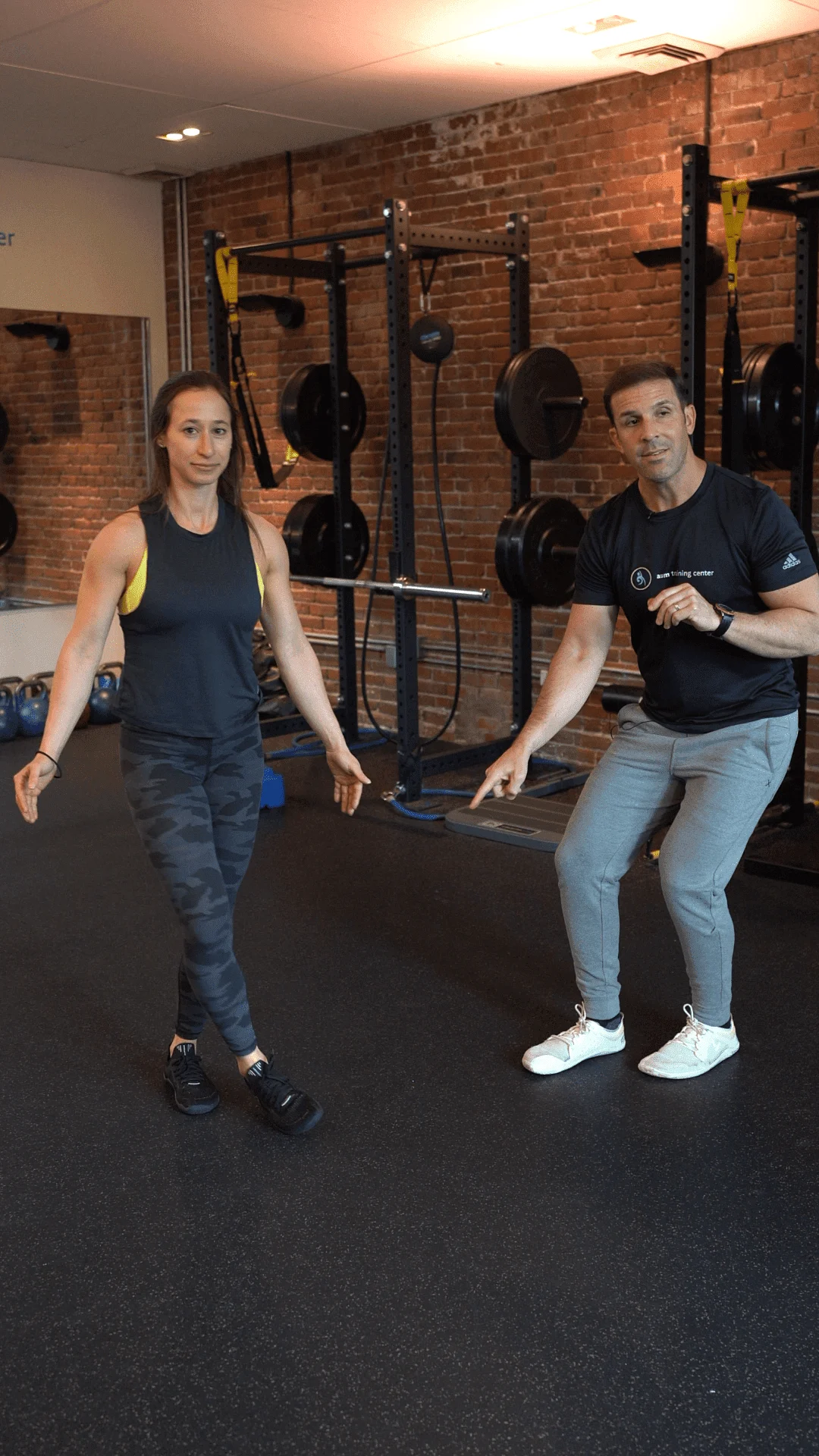
Start Position: Sit cross-legged on the floor.
The Stand-Up Motion: From that seated position, rise to standing without using your hands or knees for support. Engage your core and drive through your legs to maintain balance.
The Sit-Down Motion: Lower yourself back to a seated position slowly and with control, again avoiding any extra points of contact.
You start with 10 points total, 5 for sitting and 5 for standing.
- Subtract 1 point each time you need a hand, knee, forearm, or side of your leg for support.
- Even lightly bracing with your hand on your knee subtracts a point.
The closer you are to 10, the better your functional strength and balance.
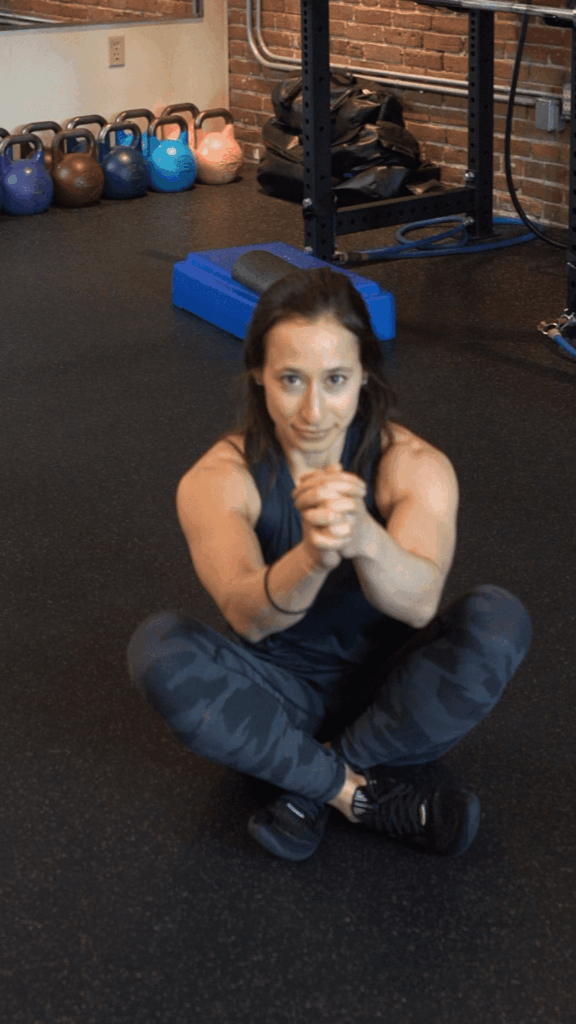
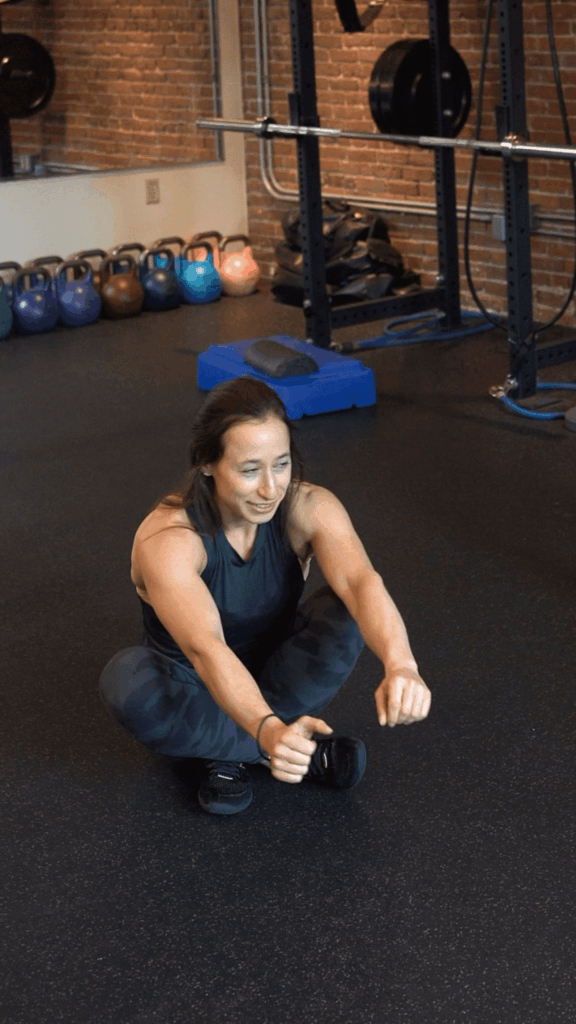
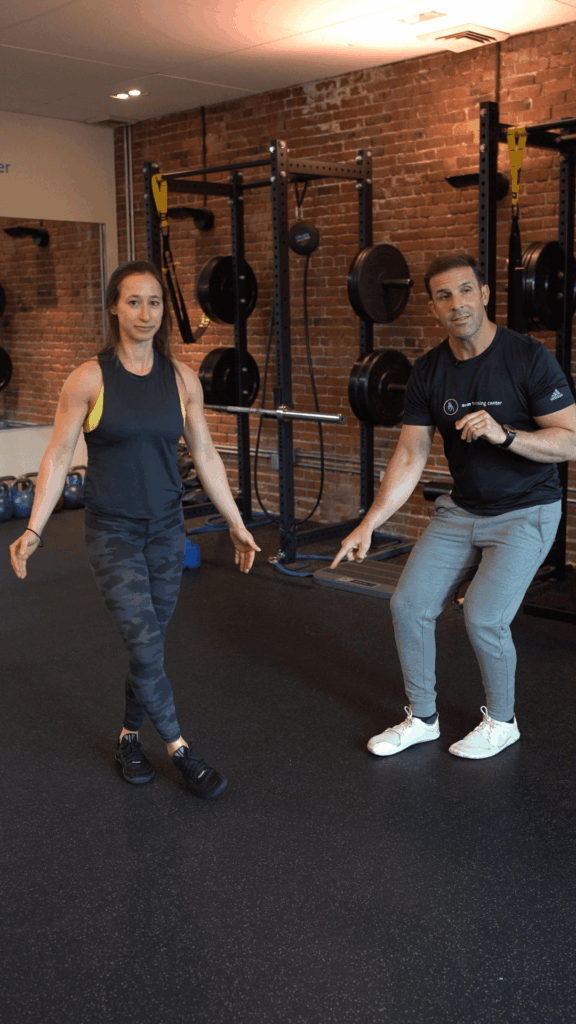
Here’s a video breakdown as well of the Sit-Stand Test
🧩 What If the Test Feels Difficult?
Don’t get discouraged. It’s not about perfection, it’s about progress.
At our personal training studio in Boston, we often use variations of this test to assess mobility and strength during client evaluations. It gives us a simple, powerful snapshot of how your body moves, and where your training should focus to improve daily function and longevity.
If you’re just getting started, try modifying the movement:
✅ Use a chair or wall for light support.
✅ As your strength improves, use less assistance , fingertips, then one finger, then none.
✅ Retest every few weeks to measure your progress.
These small steps add up to major improvements in coordination, mobility, and control.
💪 Why It Matters
Improving your performance on this test has real-world payoffs, better mobility, fewer falls, and more independence as you age.
The strength and balance required for the SRT translate directly into how easily you move through daily life. Building those capabilities through targeted personal training in Boston helps you stay active, confident, and capable for years to come.
If you have knee or hip issues, please don’t try this alone. Work with a professional who can guide you safely. Our personal trainers in Boston regularly help clients strengthen mobility safely and effectively through customized one-on-one sessions.
🏁 Ready to Improve Your Strength and Balance?
Whether you’re working with a personal trainer in Boston, training independently, or joining our virtual personal training sessions, we’re here to help!
💬 Schedule a complimentary consultation and we’ll create a plan that keeps you strong, stable, and pain-free, no matter where you’re starting.
At AUM Training Center, we help you move better, feel stronger, and build longevity through intelligent training, because your ability to move well today shapes how you’ll live tomorrow.
❓ FAQ: The Sit-to-Stand Test & Mobility Training
What does the Sit-to-Stand Test measure?
It measures your functional strength, balance, and mobility, key indicators of long-term health and independence.
What’s a “good” score on the SRT?
Scores near 10 suggest excellent balance and coordination. Don’t worry if you’re lower , consistent training can dramatically improve your results.
Can personal training help improve my SRT score?
Yes. Our Boston personal training team uses balance, stability, and mobility drills to strengthen the muscles involved in sitting and standing smoothly.
What if I can’t do it without using my hands?
Start with partial assistance. Practice consistently with guidance from a personal trainer in Boston to gradually build strength and control.
Is this test safe for people with injuries?
If you have joint issues, work with a qualified coach or healthcare provider first. Our trainers in Back Bay can help you modify the movement safely.